
After Stroke Care at Home in Chesterfield & Derbyshire
Recovering from a stroke requires patience, rehabilitation, and consistent support. Returning home from the hospital can feel overwhelming, but dedicated stroke care ensures you rebuild confidence safely.

Stroke Recovery at Home: Rebuilding Confidence Step by Step
Recovering from a stroke takes time. Every person’s experience is unique, involving changes to movement, balance, speech, swallowing, memory, and energy. We provide practical, person-centred support that works alongside your clinical stroke rehabilitation team.
Five Tips for a Safer, More Confident Home Recovery
Remove loose rugs, trailing cables, and clutter to reduce the risk of falls.
Place commonly used items at waist-to-chest height to make daily tasks easier.
Ensure bright, even lighting in hallways, bathrooms, and on stairs.
Consider grab rails, a shower seat, and non-slip mats for added safety.
Allow extra time for daily activities and rest when needed. Progress at your own pace.
Practical Support Across Every Area of Daily Life
Mobility & Falls Prevention
Pacing movement and encouraging confidence in moving safely around the house without feeling rushed.
- Keep floors dry, uncluttered, and routes unobstructed.
- Follow prescribed mobility aids (sticks, frames) exactly as assessed.
- Support safe transfers from bed, chair, or toilet at your own pace.
- Observe changes in gait, stability, or confidence and report promptly.
Meals, Drinks & Swallowing
Some people experience dysphagia (swallowing difficulties) after a stroke. Calm mealtimes and exact texture adherence are crucial.
- Create an unhurried, calm mealtime environment without distractions.
- Follow documented food textures and fluid consistencies precisely.
- Encourage upright sitting posture during and for 30 minutes after meals.
- Never alter food or fluid textures without clinical authorization.
Speech & Communication
Aphasia and speech changes can be frustrating. A person often understands far more than they can verbally express.
- Give plenty of time to respond without rushing or finishing sentences.
- Speak calmly using clear, short sentences and ask one question at a time.
- Reduce background noise (TV, radio) during important conversations.
- Use gestures, written prompts, pictures, or familiar objects if helpful.
Managing Fatigue & Mood
Post-stroke fatigue is real and profound. Emotional changes, low mood, frustration, or tearfulness are common.
- Break demanding activities into manageable steps and schedule rest breaks.
- Plan high-energy tasks for mornings or optimal times of day.
- Offer gentle companionship, reassurance, and emotional presence.
- Provide essential respite visits so family carers can rest and recharge.

Step-by-Step Recovery Checklist
Every step forward matters. Use this practical 12-point checklist to discuss your daily support routines, home safety adjustments, and personal goals with your family and care workers.
Stroke Recovery at Home: Practical Readiness Checklist
Use this checklist as a practical conversation guide with your family and care team (not a clinical assessment).
🚨 When to Seek Immediate Medical Attention
A stroke or transient ischaemic attack (TIA) is a medical emergency. If you notice any sudden or new stroke symptoms, call 999 immediately, even if symptoms appear to resolve quickly.
In the UK, anyone who has suffered a stroke or TIA must stop driving immediately for at least 1 month. You must only restart driving once your doctor confirms it is safe, and you must notify the DVLA if difficulties (vision, weakness, balance, memory) persist beyond 1 month. PYCA can provide escorted travel and transport support in the interim.
Helpful Resources & Further Guidance
Official NHS guidance on rehabilitation plans, recovery milestones, and community support after hospital discharge.
Leading UK stroke charity providing information, support groups, and resources for stroke survivors and families.
Symptoms, causes, and why immediate emergency response is crucial even if symptoms pass quickly.
Official UK driving rules and DVLA reporting requirements following a stroke or TIA.
Information on how family carers can request practical and financial support from their local council.
Council grants towards essential home adaptations, stairlifts, ramps, and accessible bathrooms.
Arrange post-stroke care consultation
Frequently Asked Questions
Clear answers about care and support after a stroke.
After stroke care at home may include support with washing, dressing and personal routines, safe movement around the home, meals and hydration, everyday routines, companionship, and reassurance. Support can be tailored around the person’s recovery, abilities, confidence, and goals while encouraging independence wherever possible.
Yes. Many people benefit from practical support when returning home after hospital. Prime Years Care Agency can assess the person’s needs, routines, mobility, confidence, and the areas where extra help is required, then provide a personalised care arrangement where we can safely meet those needs. Support can help make the transition home feel more manageable.
Live-in care can be suitable for someone who needs more continuous one-to-one support throughout the day and night. It may be particularly helpful when mobility is significantly affected, confidence is low, fatigue is high, family members are worried about leaving the person alone, or everyday routines have become much more demanding. Suitability depends on an individual assessment and whether the person’s needs can be safely met.
Depending on the agreed Care Plan, a Care Worker may support personal care, meals and drinks, safe movement, everyday routines, appointments, light household tasks, companionship, and reassurance. They can also observe and report changes in confidence, stamina, or day-to-day ability. Any mobility or other support must remain within the Care Worker’s training, competence, and the agreed plan.
Yes. Recovery after a stroke is different for everyone, and the level of support someone needs can change over time. Care arrangements can be reviewed as abilities, confidence, routines, or support needs change. The aim is to provide the right level of practical help while encouraging the person to remain as independent as possible.
A stroke can affect more than physical movement. Some people experience changes in speech or communication, balance, fatigue, memory, confidence, or emotional wellbeing. Care at home can provide patience, reassurance and practical support with everyday routines while following any guidance already provided by the person’s healthcare or rehabilitation team. Care Workers do not provide clinical rehabilitation or replace specialist professionals.
Prime Years Care Agency provides practical, non-clinical support within an agreed Care Plan, staff training, and competence. Our Care Workers do not diagnose, prescribe, provide clinical rehabilitation, or replace doctors, nurses, physiotherapists, occupational therapists, or other healthcare professionals.
Getting Started is Easy
Arranging support doesn't have to feel overwhelming. We'll guide you through every step at your own pace.

Arrange a Free Consultation
We'll listen, answer your questions, and understand your family's situation without any obligation.

In-Home Care Visit
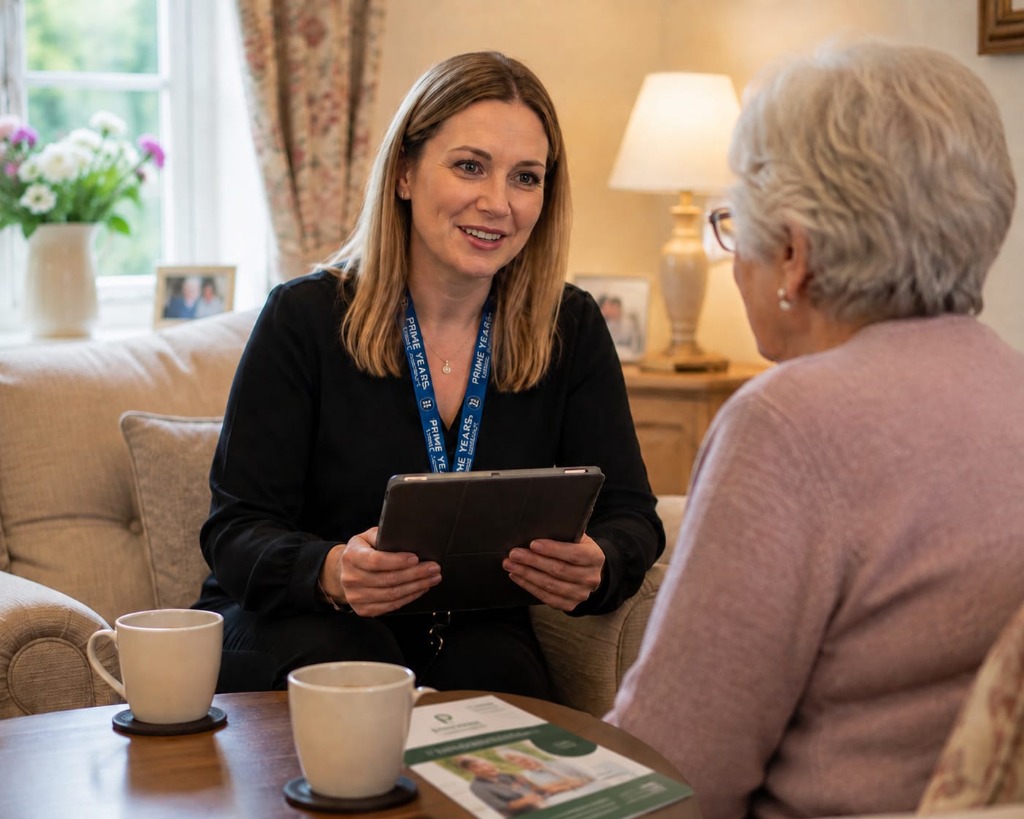
Meet in the comfort of your home to discuss needs, routines and the type of support that would make the biggest difference.
Personalised Care Plan
Receive a personalised care plan with flexible options including home care, overnight care, or live-in care.