
End of Life Care at Home in Chesterfield & Derbyshire
Spending your final weeks or months in the peace, dignity, and familiar warmth of your own home is a deeply personal choice. We provide sensitive, respectful palliative care focused on comfort, pain management support, and family reassurance.

Compassionate, Person-Centred Care in the Comfort of Home
Palliative and end-of-life care is about helping someone live as comfortably, safely, and meaningfully as possible. We provide gentle practical and emotional support for both the individual and their family, working in close harmony with your healthcare team.
Working Alongside Your Clinical Palliative Team
Prime Years Care Agency works collaboratively alongside your GP, district nurses, community palliative-care team, hospice nurses, and local healthcare services across Derbyshire and Nottinghamshire.
Our Care Workers provide non-clinical personal and practical care within an agreed Care Plan and staff competence. They follow professional clinical guidance and do not diagnose, prescribe, alter medical treatments, or replace district nurses, palliative doctors, or hospice teams.
How We Help You and Your Loved Ones
Following assessment and agreement, our Care Workers provide unhurried personal care, mouth care, soothing companionship, and vital respite visits so family members can spend peaceful, meaningful time together.
Our End of Life Support Includes
Help with medication at the right times, following the agreed plan.
Unhurried support with personal care, including mouth care, to maintain comfort and dignity.
Repositioning or mobility support where assessed, planned and within staff training and competence.
Helping to keep the home calm, comfortable and safe.
A caring presence, friendly conversation and emotional support.
Help with shopping, light housekeeping, laundry and other everyday tasks.
Comfort & Personal Care
Unhurried, gentle assistance with personal hygiene, ensuring privacy, physical comfort, and dignity are honoured at all times.
- Gentle bed washes, freshening up, or assisted bathing.
- Comfortable mouth care, lip balm application, and facial cleansing.
- Assisted repositioning in bed using agreed slide sheets and pillows.
- Maintaining a comfortable, peaceful, and warm bedroom environment.
Nutrition & Hydration
Appetite and thirst naturally change towards the end of life. Support is provided patiently around what feels good and manageable.
- Offering small, nourishing bites, soups, or favourite comfort foods.
- Frequent sips of water, juices, or ice chips to keep mouth moist.
- Strictly adhering to any clinical swallowing guidance.
- Never forcing food or fluid if the individual prefers not to eat.
Emotional Presence & Calm
A peaceful, reassuring presence to reduce anxiety and provide comfort through quiet companionship or conversation.
- Sitting quietly, holding a hand, or offering gentle reassurance.
- Reading favourite books, poems, or playing preferred soothing music.
- Respecting religious, spiritual, and cultural wishes and rituals.
- Creating space and privacy for visits from family and cherished friends.
Family Care & Respite
Caring for someone at the end of life is emotionally and physically demanding. We provide essential support so families can recharge.
- Overnight care (sleeping or waking nights) allowing family to sleep.
- Daytime respite visits so family carers can step away for rest.
- Handling light household chores, tea making, and laundry.
- Providing continuous 24/7 live-in care if preferred at home.
A Conversation About What Matters Most
These conversations help us understand what is important to you, so we can provide support that is personal, respectful and compassionate. They can take place with you, and with family or loved ones if you wish.
Comfort and personal care
What helps you feel comfortable, relaxed and yourself, including clothing and daily routines.
Music, company and quiet time
The sounds, conversations or quiet moments that bring you comfort.
Food and drinks
Your favourite meals, drinks and any personal preferences.
Family, friends and visitors
Who you would like to be involved or kept informed, and how you prefer visits.
Faith, culture and personal wishes
Any spiritual, cultural or religious practices that are important to you.
Anything else that matters to you
Other wishes, preferences or messages you would like to share.
These conversations can take place during care planning, at a review, or whenever you feel ready. With your consent, your preferences can be recorded in your care plan and shared with the relevant care team. Your wishes may change over time and can be reviewed whenever needed.
You Don't Have to Do It Alone
Whether you need practical assistance, emotional reassurance, or simply someone trusted to share the caring responsibilities, Prime Years Care Agency is here for you and your family across Derbyshire and Nottinghamshire.

📋 When to Contact the Clinical Healthcare Team
Contact the assigned GP, district nurse, community palliative nurse, or hospice team promptly if you observe any of the following changes:
Helpful Organisations & Support Resources
Practical and emotional guidance for family carers supporting someone at home, plus free Support Line: 0800 090 2309.
Overview of advance care planning, clinical support services, hospice care, and what to expect.
Comprehensive resources on symptom management, emotional support, benefits, and palliative cancer care.
National charity working with hospices across the UK, supporting end of life care for adults and children.
24/7 medical triage and guidance for urgent healthcare concerns and out-of-hours symptom advice.
Request a confidential end-of-life care consultation
Frequently Asked Questions
Clear answers about compassionate support at home.
End-of-life care is care and support for someone who is approaching the end of their life. It focuses on helping the person live as comfortably, safely, and meaningfully as possible, while respecting their wishes, dignity, and preferences. It can include practical, personal, emotional, and social support alongside care from healthcare professionals.
Yes. End-of-life care can be provided at home where this is appropriate, and the person’s needs can be safely supported. Their GP, district or community nurse, specialist palliative-care team or hospice team may be involved in coordinating clinical care. Prime Years Care Agency can provide non-clinical care and practical support at home alongside the person’s healthcare team.
Following assessment and agreement, PYCA Care Workers can support personal care such as washing, dressing, toileting, and continence care, as well as meals, drinks, light household tasks, companionship, and reassurance. They may also support medication in line with the agreed Medication Plan and provide repositioning or mobility support only where this has been assessed, planned and is within their training and competence.
Yes. Caring for someone at the end of life can be physically and emotionally demanding, and family carers need support too. Depending on the person’s assessed needs, PYCA may provide respite, overnight or live-in care so family members can rest, attend to their own needs, or take a break. We can also help with practical day-to-day tasks and provide companionship and reassurance.
Planning ahead can help make sure the person’s preferences are known and respected. Conversations may include where they would prefer to be cared for, who they want involved, important routines, cultural or spiritual preferences, food and comfort preferences, advance care planning, relevant advance decisions or Lasting Power of Attorney, emergency contacts and wishes about visitors, privacy, music or quiet time. Healthcare professionals can provide clinical advice and help coordinate the plan.
Contact the agreed healthcare professional if there is a change in symptoms, comfort, or the person’s ability to manage safely at home. Urgent clinical advice should be sought for new or worsening pain, breathlessness, distress or agitation; difficulty swallowing medication, food or fluids; new confusion or reduced consciousness; a fall or new weakness; problems with clinical equipment; pressure-area concerns or signs of infection; or if the agreed care plan no longer meets the person’s needs. Call 999 for a life-threatening emergency.
Prime Years Care Agency provides non-clinical support within an agreed Care Plan, staff training, and competence. Our Care Workers do not diagnose, prescribe, alter clinical treatment, or replace GPs, district nurses, palliative-care teams, hospice teams, or emergency services.
Getting Started is Easy
Arranging support doesn't have to feel overwhelming. We'll guide you through every step at your own pace.

Arrange a Free Consultation
We'll listen, answer your questions, and understand your family's situation without any obligation.

In-Home Care Visit
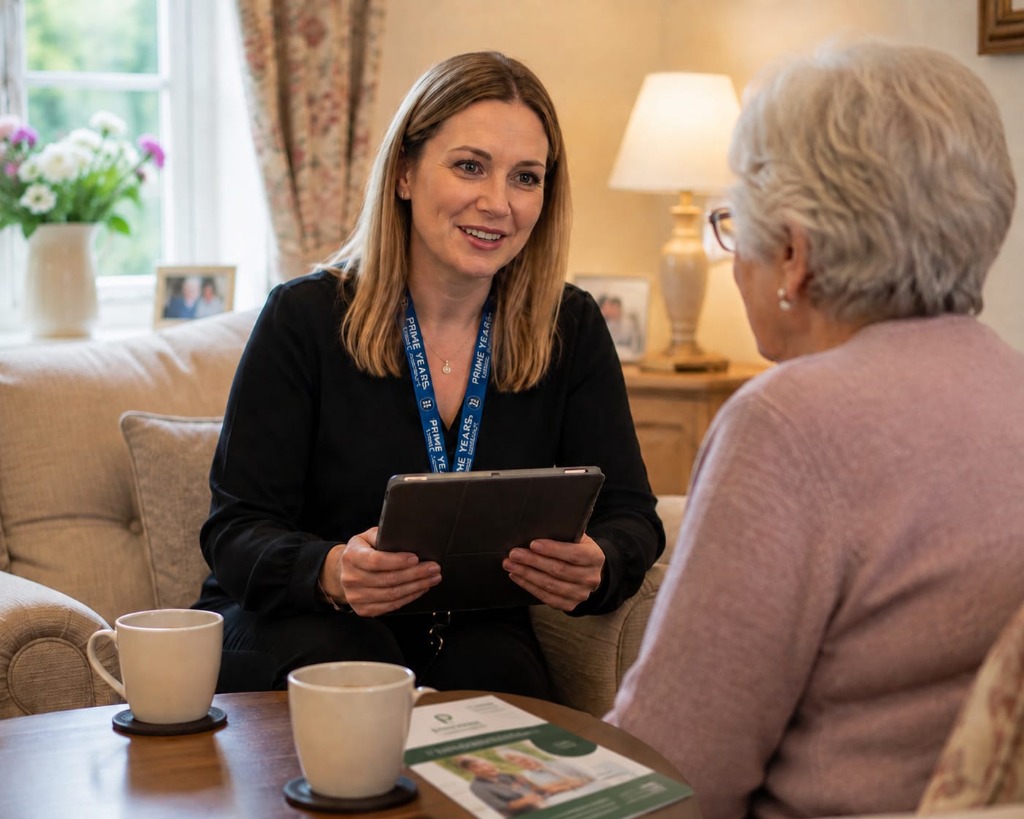
Meet in the comfort of your home to discuss needs, routines and the type of support that would make the biggest difference.
Personalised Care Plan
Receive a personalised care plan with flexible options including home care, overnight care, or live-in care.